My wife and I were walking in Osaka in the evening looking for a place to eat.
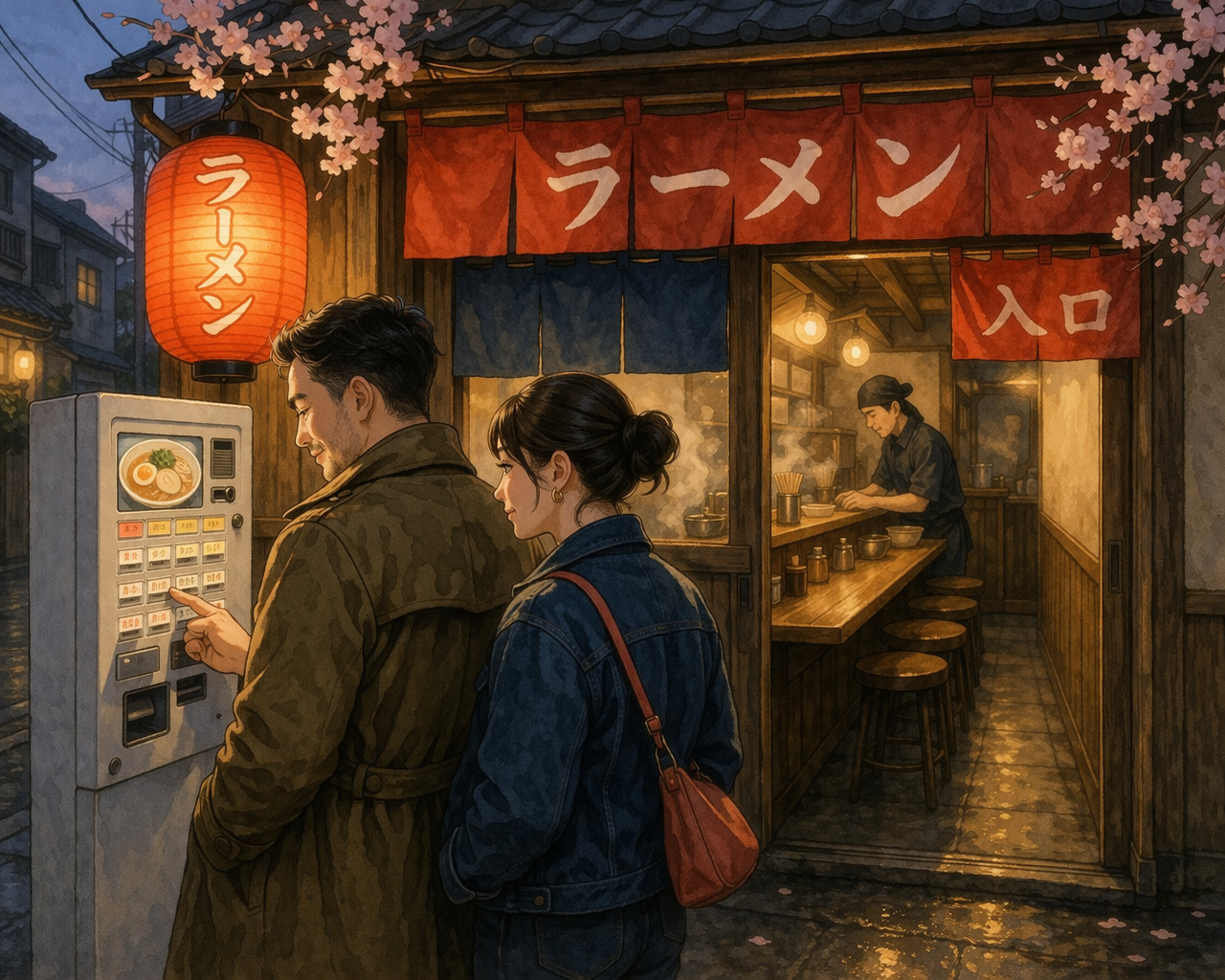
We found a ramen spot that looked promising.
It was one of those small places where you order from a machine first. You choose what you want, pay, and get a ticket to hand to the staff.
I was the only one hungry, so I was the only one who bought a ramen ticket at first.
The place was tiny, maybe around 10 seats.
When we walked in, the staff welcomed us with irasshaimase.
A couple of things stood out to me right away. Because of how small the space was, the entrance and exit were separate. I also noticed the staff were wearing microphones to communicate with each other.
I handed over my ticket and we both sat down.
A little later, after my ramen arrived, my wife decided she wanted dessert.
She got up and walked out through the exit to go back to the machine outside.
As she was leaving, I heard one of the staff say something that sounded like "current customer."
That caught my attention.
In Japan, it is common for staff to thank customers as they leave with arigatou gozaimashita. But they did not say that to her, because she was not actually leaving. She was still an active customer, just stepping out to order something else.
She went to the machine, bought a dessert ticket, and came back in.
Again, I heard the staff say the same thing to each other. And again, they did not greet her with irasshaimase, because there was no need. She had already been welcomed.
She handed over the ticket, got her dessert, and we finished eating.
Then, when we both actually left the restaurant, that was the moment we got the arigatou gozaimashita.
What I liked was how much awareness was happening in the background.
They were paying close attention to where each customer was in the experience, and adjusting their behavior accordingly.
The best customer experiences are often the ones where the thoughtful parts stay invisible.